Welcome
We are delighted to welcome you.
The Orthodox Catholic Archdiocese of North America is a Western Rite expression of the One, Holy, Catholic, and Apostolic Church that has existed since the time of the Apostles. We are a faith community called by Christ to a life of radical discipleship through:
- Proclaiming the Good News to the whole world. (Matthew 10:1)
- Teaching the inclusive and transforming love of God for all people. (Genesis 1:31)
- Healing, reconciling, and empowering the faithful through the sacramental life of the Church. (Matthew 10:6–8)
The question before each of us is this: Are you being called to a life of radical discipleship?
Are you called to embrace the compassion and poverty of Mother Teresa, the prayerful devotion of the Desert Fathers, the courage and sacrifice of Dietrich Bonhoeffer, or the self-giving celibate life exemplified by Jesus Christ? Are you called to a prophetic vocation, to full-time ministry, and to serving the poor, the forgotten, and the marginalized?
If your answer is yes, then we welcome you with open hearts.
Yet we also recognize the truth in the words of Brennan Manning:
“Fidelity to the prophetic word will take us along the path of downward mobility in the midst of an upwardly mobile world. We will find ourselves not on the path to power but on the path to powerlessness; not on the road to success but on the road to servanthood; not on the broad road of praise and popularity but on the narrow road of ridicule and rejection.”
The call to follow Jesus of Nazareth is not an easy one. It is a sacred vocation marked by sacrifice, humility, obedience, and love. Not everyone is called to this path of discipleship, for as Scripture reminds us, “A man can receive only what is given him from heaven” (John 3:27).
If you believe God is calling you to this deeper journey of faith and service, we invite you to walk with us.
501(C)(3) TAX EXEMPT STATUS
Introducing the Western Rite
The Western Rite Orthodox Tradition
A Western Rite parish differs from the more widely recognized Eastern or Byzantine Rite parishes within the Orthodox Church. Before the separation between East and West, the ancient liturgical traditions of Western Christianity flourished within the One, Holy, Catholic, and Apostolic Church. Following the Great Schism, however, much of the Western liturgical heritage gradually disappeared from Orthodox life in the West.
During the nineteenth century, especially following the development of the doctrine of papal infallibility within the Roman Catholic Church, many Western Christians began seeking the apostolic continuity and theological purity preserved within Holy Orthodoxy. These believers desired to maintain the ancient understanding of the Bishop of Rome as holding a primacy of honor rather than universal jurisdiction and supremacy. At the same time, they sought to preserve their traditional Western forms of worship, purified and restored in harmony with Orthodox theology.
In response to this desire, the Holy Synod of Moscow approved a restored form of the ancient Western Liturgy, commonly known as the Liturgy of St. Gregory the Great. This liturgy remains one of the oldest surviving liturgical expressions of the undivided Church still celebrated today. Through this restoration, the Orthodox Church reaffirmed the rightful place of Western liturgical spirituality within the fullness of Orthodoxy.
In the twentieth century, the Patriarchate of Antioch formally established the Western Rite Vicariate in North America, further confirming the legitimacy and value of Western liturgical tradition within the Orthodox Church. In doing so, the Church reclaimed an authentic part of her historical and spiritual inheritance.
According to the Western Rite Directory promulgated by Metropolitan ANTONY Bashir in 1962, the purpose of the Western Rite is twofold:
- To provide a spiritual home within the Orthodox Church for Western Christians from non-Byzantine cultural and liturgical backgrounds.
- To bear witness to the catholicity, universality, and fullness of the Orthodox Church among Byzantine Rite faithful, clergy, and theologians.
Although smaller in number than Eastern Rite communities, Western Rite Orthodoxy continues to grow throughout the world, particularly in the United States. It has become a fruitful missionary outreach to those who seek the fullness of the Orthodox Catholic Faith while remaining rooted in the spiritual and cultural expressions of the Christian West.
Orthodox Christians of both the Western and Eastern Rites remain fully united in faith and communion. They share the same sacraments, apostolic doctrine, episcopal hierarchy, and holy tradition. Clergy of both rites serve under canonical Orthodox bishops and together confess the one Faith delivered to the saints.
The mission of the Orthodox Church, founded by Jesus Christ and proclaimed by the Apostles, is to lead all people into the fullness of Truth. Wherever the Orthodox Faith has been faithfully preached and lived, it has drawn souls to Christ. In a world increasingly marked by spiritual confusion and doctrinal instability, the Orthodox Church continues to stand as a beacon of apostolic truth, holiness, and continuity.
The Western Rite Liturgy
Not all Orthodox Christians worship according to Eastern or Byzantine liturgical forms. The Western Rite preserves the historic liturgical traditions of Western Christianity while remaining fully Orthodox in theology, sacramental life, and spiritual practice.
Compared to the Byzantine Rite, the Western Rite is generally simpler in structure, shorter in length, and incorporates hymnody and liturgical expressions that are familiar to many Western Christians. The Western Rite, as approved by the Orthodox Catholic Archdiocese, consists primarily of traditional Roman Catholic and Anglican liturgical forms carefully corrected and restored to conform fully to Orthodox doctrine.
Some Western Rite parishes celebrate a form of the ancient Roman Liturgy in either Latin or English, reflecting the reverence and beauty of pre–Vatican II Catholic worship. Others use liturgies derived from the traditional Anglican Book of Common Prayer. While the theological corrections introduced by the Orthodox Church are significant, they are often subtle enough that many traditional Roman Catholics and Anglo-Catholics would find the worship both familiar and spiritually enriching.
Among the most important restorations are:
- The removal of the Filioque (“and the Son”) from the Nicene Creed.
• The strengthening of the Epiclesis, the invocation of the Holy Spirit during the Eucharistic Prayer.
The Nicene Creed teaches that the Holy Spirit proceeds from the Father. Historically, the addition of the Filioque clause in the West developed gradually and was originally resisted even by early Bishops of Rome. Orthodox theology preserves the distinct relationships within the Holy Trinity: the Son is eternally begotten of the Father, and the Holy Spirit eternally proceeds from the Father through the Son.
In the Western Rite Orthodox Liturgy, the priest explicitly invokes the Holy Spirit upon the Eucharistic Gifts, praying:
“And we beseech thee, O Lord, to send down thy Holy Spirit upon these offerings, that He would make this bread the precious Body of thy Christ, and that which is in this Cup the precious Blood of thy Son, our Lord Jesus Christ, transmuting them by thy Holy Spirit. Amen. Amen. Amen.”
In addition to these restorations, the Western Rite preserves the beauty, reverence, and devotional richness of historic Western Christianity while remaining fully Orthodox in faith and practice.
As many traditional Christians observe increasing departures from historic Christian doctrine and worship within portions of Roman Catholicism and Protestantism, many are rediscovering the stability, apostolic continuity, and sacramental fullness of the Orthodox Church through the Western Rite. Here, they are able to retain reverent and familiar forms of worship while entering into full communion with the ancient Orthodox Faith under canonical Orthodox bishops who faithfully proclaim the Gospel of Jesus Christ handed down from the Apostles.
OUR BELIEF
THE CREED
I BELIEVE IN ONE GOD, the Father Almighty, Maker of heaven and earth, and of all things visible and invisible.
And in one Lord Jesus Christ, the Son of God, the Only-begotten, begotten of the Father before all ages; Light of Light: true God of true God; begotten, not made; of one essence with the Father; by Whom all things were made: Who for us men, and for our salvation, came down from heaven, and was incarnate of the Holy Spirit and the Virgin Mary, and became man; And was crucified for us under Pontius Pilate, and suffered, and was buried; And arose again on the third day according to the Scriptures; And ascended into Heaven, and sitteth at the right hand of the Father; And shall come again, with glory, to judge both the living and the dead; Whose kingdom shall have no end.
And in the Holy Spirit, the Lord, the Giver of Life; Who proceeds from the Father; Who with the Father and the Son together is worshipped and glorified; Who spake by the prophets. In One, Holy, Catholic, and Apostolic Church. I confess one baptism for the remission of sins. I look for the resurrection of the dead, And the life of the age to come. Amen.
AS A COMMUNITY:
We are Orthodox = Acts 15:6-12, we accept, live and obey the apostolic teachings.
We are Catholic = Matt 13:24-30, we welcome all created in the image and likeness of God.
We are Charismatic = John 16:12-15, we are open to the promised Holy Spirit who will guide us to all truth.
We are a Church = Mark 14:22-26, we meet in memory of Jesus of Nazareth.
Worship
At present, there are two different Uses available to Orthodox Catholic Church parishes:
Divine Liturgy of Saint Tikhon: This liturgy is currently used by approximately two-thirds of congregations in the Antiochian Western Rite Vicariate. The Rite of St. Tikhon was developed utilizing the 1928 American Book of Common Prayer and the Anglican Missal. The Book of Common Prayer was altered by removing the filioque from the text of the Nicene Creed, and to include prayers for the dead, the invocation of the saints, and strengthening the epiclesis within the Eucharistic prayer, and by adding the pre-communion prayers from the Byzantine Rite.
Divine Liturgy of Saint Gregory: Utilized by the remainder of the Antiochian Western Rite Vicariate as well as some communities in The Russian Orthodox Church Outside of Russia, this rite is a version of the Roman Tridentine Mass which has been altered to remove the filioque and inserting a Byzantine epiclesis. It is used primarily by parishes formerly of a Lutheran, Roman Catholic, or Old Catholic background, including those incorporated from the Society of Saint Basil in 1961.
Ordination and Incardination
General Considerations
The Orthodox Catholic Archdiocese welcomes inquiries from men discerning a call to the Permanent Diaconate, Holy Priesthood, or service as lay evangelists within our communion, as well as women who are called to the ministry of the Deaconess.
Regardless of where ministry is to be exercised, all candidates for ordination in the Orthodox Catholic Church are ordained and granted faculties under the authority and jurisdiction of the Church.
Discernment of God’s call to ordained ministry is a sacred and prayerful process that cannot be undertaken entirely from a distance. Those seeking admission should ensure that they either reside within reasonable traveling distance of one of our missions or are willing to relocate for the purpose of formation and training. While portions of theological education may be completed remotely, essential aspects such as altar training, pastoral formation, mentorship, and ministerial assessment require direct personal engagement.
Preparation for Holy Orders is both spiritual and practical. Candidates are formed to receive the grace of the Order they seek and to faithfully exercise ministry within the life and mission of the Church. Holy Orders are conferred not for personal status or advancement, but for the service and ministerial needs of the Church. Therefore, candidates must demonstrate genuine compatibility with the spiritual character, discipline, and traditional Orthodox witness of the Orthodox Catholic Church, while the Church must likewise discern the candidate’s suitability for ministry within its communion.
Candidates for ordination or incardination must satisfy the Ordination Committee that they can exercise a faithful, productive, and loyal ministry within the Church. This is ordinarily demonstrated through a period of attachment to a mission, parish, or approved ministry setting, during which candidates are entrusted with responsibilities designed to test, strengthen, and confirm their vocation.
First Steps
At the initial stage, inquirers are invited to begin the discernment process through email correspondence and the submission of relevant background information and supporting documents to the vocation team. If further exploration is deemed appropriate, the candidate will be invited to meet with a bishop for interviews and formal assessment.
The assessment process includes a psychological evaluation conducted by a qualified professional appointed by the Church. Should the interview and assessment process result in a favorable recommendation, the candidate will be assigned to a parish, mission, or oratory for ministerial formation and instruction.
Although preparation for ministry is generally non-stipendiary and not conducted on a full-time basis, candidates should recognize that the formation process is spiritually demanding, intellectually rigorous, and personally challenging.
Specific Considerations
Candidates who have disabilities or medical conditions requiring support are encouraged to disclose such matters early in the inquiry process. The Church is committed to enabling qualified individuals to serve effectively in ministry; however, candidates should understand that the Church’s ability to provide accommodations may be limited by available resources.
The Church does not ordinarily admit candidates with criminal convictions. Exceptions may be considered where there is clear evidence of sincere repentance, restoration, and personal transformation. Nevertheless, offenses involving violence, sexual misconduct, abuse of trust, or similar grave matters will normally disqualify a candidate from consideration.
Candidates for Holy Orders must demonstrate emotional, spiritual, and personal stability. They should possess the ability to maintain a consistent and disciplined life, provide for themselves financially, and, where applicable, pursue secular employment compatible with Christian ministry. Candidates should also have the support of their immediate family and must be willing to uphold the traditional Christian teaching on marriage and family life both personally and publicly.
Educational Requirements
Candidates for the Permanent Diaconate, Priesthood, or the ministry of Deaconess are ordinarily required to possess a bachelor’s degree in theology or an equivalent qualification. In certain cases, substantial ministerial experience deemed equivalent by the assessment panel may satisfy this requirement.
The Orthodox Catholic Archdiocese maintains its own seminary, St Michael’s Institute which operates under the authority of the Church’s Educational Department. The Seminary awards degrees associates, bachelors, master’s degrees in theology, Spiritual Care, Pastoral Counseling, Chaplaincy etc for candidates preparing for ordination within the Church.
Programs are typically conducted through mentored instruction, online and correspondence-based study, with academic formation tailored to the candidate’s previous education, ministerial experience, and particular areas of interest.
Alternatively, candidates may pursue theological studies through an approved university, Orthodox seminary, or accredited institution recognized by the Church.
Ministerial Formation
The Church places strong emphasis on the spiritual development of candidates through a disciplined life of prayer, worship, sacramental participation, and Christian service.
Because of the ecumenical nature of the Orthodox Catholic Church, candidates may encounter opportunities for engagement with the worship and ministry of other Christian communities. Formation should also include active service within the local community through works of compassion, evangelism, and pastoral outreach.
Examples of such ministry include prison visitation, ministry to the elderly and disabled, parish administration, charitable service, youth chaplaincy, and street evangelism. Candidates are expected to take initiative in developing and nurturing these forms of ministry, recognizing that such experiences often become foundational to their future priestly or diaconal service.
The Church remains flexible in recognizing the diverse gifts and callings of individual candidates and encourages a variety of faithful expressions of ministry.
Character of Ministry Within Our Jurisdiction
The Orthodox Catholic Church is fundamentally a sacramental community. Candidates for ordained ministry must demonstrate a deep commitment to the Holy Eucharist, understood by the Church as the sacramental sacrifice of Christ, together with fidelity to traditional liturgical worship and altar ministry.
All ordained ministers serve under canonical obedience. Formation therefore seeks to cultivate the virtues of humility, discipline, faithfulness, and cooperation within the life of the Church.
Candidates accepted for ordination commit themselves to a minimum term of five years of ministry within the jurisdiction following ordination. During this period, they may not seek transfer or excardination to another communion without incurring serious canonical consequences.
Incardination
In certain circumstances, clergy ordained in another jurisdiction may discern that their ministry is more appropriately fulfilled within the Orthodox Catholic Church and may seek incardination.
The Church exercises great care and discernment in accepting clergy through incardination. Valid ordination alone is not sufficient grounds for admission, as ministerial standards often differ between jurisdictions. Stability, doctrinal integrity, and demonstrated commitment are essential considerations.
Candidates for incardination are required to possess a degree in theology and must demonstrate freedom from canonical impediments within their former jurisdiction. Where applicable, a Letter of Consent or excardination approval from the candidate’s current Ordinary must be provided.
All candidates for incardination are required to undergo interviews and assessments with one or more bishops of the Church. Acceptance may involve a preliminary period of observation under temporary episcopal oversight, and incardination may initially be granted on a provisional basis subject to review after six months or one year.
Where clergy are responsible for communities or religious bodies outside communion with the Church, all associated clergy and professed members must individually meet the standards required for admission into the Orthodox Catholic Church. Independent or partial affiliations are not permitted. Such communities must either fully enter the jurisdiction of the Church or remain outside it.
At present, bishops from jurisdictions outside our recognized intercommunion relationships are generally not eligible for incardination except under exceptional circumstances.
Inquiries
Those interested in ordination or incardination should submit an initial inquiry to the Church Vocations Director at: 410-988-0254
The inquiry should include a summary of the applicant’s background, Christian journey, ministerial experience, and reasons for seeking ministry within the Orthodox Catholic Church.
Armed Forces and Veteran Chaplaincy Services
If you are interested in Military or VA hospital Chaplaincies, please call
Phone 803-834-2891
Chaplain Candidate Program
Are you looking for an exciting new way to practice your ministry?
Then the Chaplain Candidate Program in the United States Armed Forces may be right for you. The chaplain candidate programs allow seminary students to gain ministry experience and serve
their country while studying for ordination. The United States Army Reserve, Army National Guard, Navy, Reserve and Air Force Reserve all provide a chaplain candidate program for seminary students who are interested in becoming military chaplains.
Chaplain candidates are full time seminary students who have graduated with a bachelor’s degree from an accredited college or university with at least 120 semester hours. Chaplain candidates are directly commissioned as 2nd Lieutenants
or Ensigns (O-1) and attend a basic officer’s training course. Chaplain candidates are
paid as officers (O-1) and may also receive educational benefits as well. Chaplain
candidates endorsed by the Orthodox catholic Archdiocese in North America should
be those who feel called to pursue ordination to the priesthood through the canonical process.
The various branches of the military have different requirements for join their
chaplain candidate programs. The requirements can be found at these locations:
Army: http://www.goarmy.com/chaplain/chaplain_candidate_prog.jsp
Navy: http://www.navy.com/careers/officer/chaplain/
Air Force: http://www.afrc.af.mil/library/chaplain/howtojoin/candidate/index.asp
For Chaplains seeking affiliation with the OCANA Clergy seeking endorsement through the Orthodox Catholic Archdiocese in North America who were ordained by non-Catholic or Orthodox Church should contact the Vicar General in order to insure that all pertinent canonical requirements are met before endorsement.
Military Service Links
The following are links to each Service’s web site:
* The Coast Guard, Marine Corps and Navy are under the same command
Rule of Life for Chaplains
These are the Spiritual Guidelines for all Chaplains.
Chaplains are to pray daily the Morning and Evening Office.
Intercessory prayers are to be offered daily for all OCANA Chaplains by name.
Chaplains are to correspond with their endorsing bishop four times a year during
the Ember Days providing him with an update of their ministries, their families, and what spiritual/theological reading is being done.
Chaplains are to make a sacramental confession during Advent and Lent.
It is encouraged that there be greater frequency beyond the seasons of Advent and Lent. They are to seek out a receptive Roman Catholic priest if an OCANA priest is not available. Chaplains are expected to attend the Annual Conference.
Chaplains are to make an annual monetary gift to the Chaplaincy Deanery of the Archdiocese
RESOURCES
Dialogue and Joint Declarations with the Roman Catholic Church
Online Services join Facebook, YouTube, etc
Time: Pacific Standard Time,
Sunday
Bible Study – 9 a.m.
Holy Mass – 10:00 a.m.
Wednesday
Midweek Bible Study- 7.00 pm
Friday
Praise and prayer- 7.00 pm
Monthly Healing Service
First Tuesdays- 7.00 pm
AFRICAN MISSION OUTREACH
Brennan once said, “Christians filled with the authenticity, commitment, and generosity of Jesus would become the greatest sign of hope in human history. The call of Jesus is revolutionary. If we truly lived it out, we could transform the world within a few months.”
This raises an important question: When was the last time you made a meaningful impact in someone’s life?
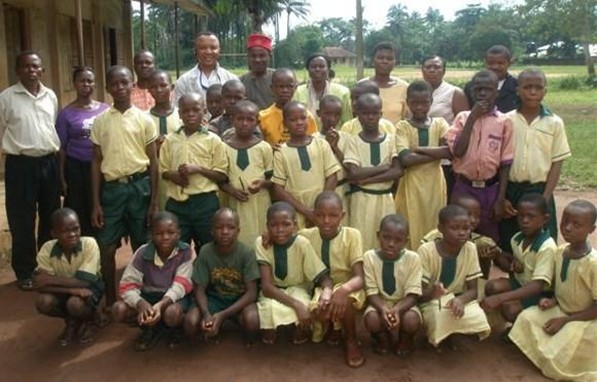
Today, you have an opportunity to become part of a life-changing mission dedicated to empowering others and helping them achieve their dreams. Across many villages in Africa, countless children dream of a brighter future, yet many never move beyond the dreaming stage because of the limitations imposed by poverty and lack of opportunity. Their minds are full of potential, waiting only for encouragement, education, and support to expand beyond their present circumstances.
I humbly invite you to join us in making a difference.
Our Church organization recognizes the call of Divine Providence to serve marginalized children in Africa. Through educational mission outreach programs and short-term mission trips to remote villages, we strive to provide hope, learning opportunities, and a pathway toward a better future.
The purpose of this appeal is threefold:
First, to invite you to participate in this mission;
Second, to request your prayers for safe travels and successful outreach efforts;
And third, to ask for your financial support.
Your contribution will help educate and uplift vulnerable children whose futures depend on the kindness and generosity of others. As the familiar saying reminds us, “The mind is a terrible thing to waste.”
In many of these villages, the total cost of educating a child from Pre-K through 12th grade is less than $5,000. By supporting a child’s education, you are investing in a future leader, and your generosity will forever remain part of that child’s story and success.
No gift is too small, and every donation is deeply appreciated. Contributions may be sent to the Providence Mission Coordinator.
May the good Lord richly reward you for your kindness, compassion, and support.
For questions or additional information, please contact the Mission Coordinator at:
803-834-2890 / 803-834-2891
or leave a message at 410-988-0254.
OUR STAFF
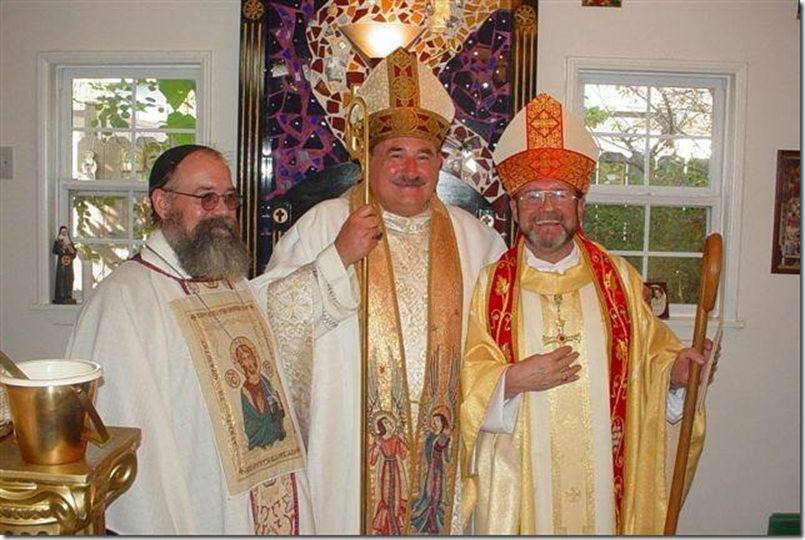
Archbishop Donald Jolly-Gabriel, PhD Metropolitan with auxiliaries California
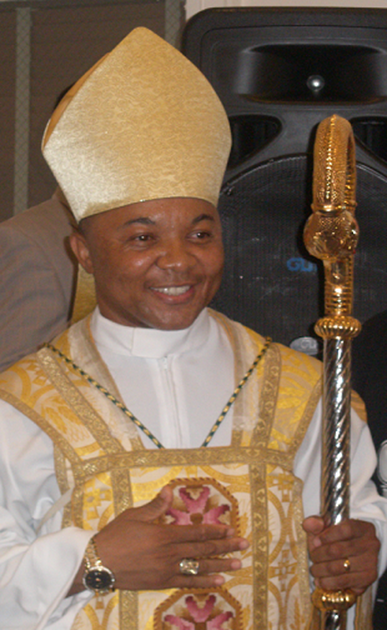
The Most Rev. Ike Eweama, PhD, DMin Archbishop of Armed Forces & Veteran Chaplaincy Services Washington DC
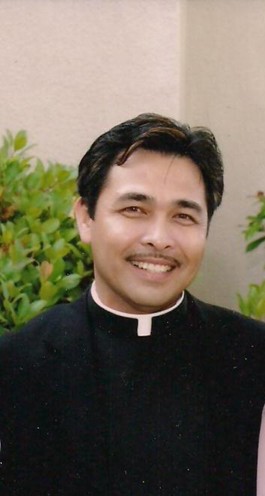
Rev Fr. Major Diosdado T. Quinton Director of Pastoral Care Las Vegas
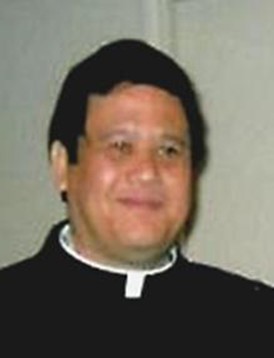
Very Rev. Msgr. Angel Arcilla, STD Director of Ecumenical Relations New York
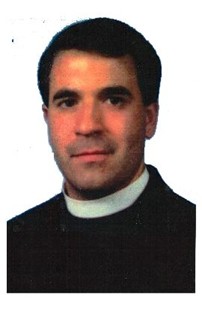
Rev. Fr. Captain Samuel Joseph Divine Director of Youth's program Alabama
Seminary
Here’s a polished rewrite with a more formal and flowing tone:
St. Michael’s Institute is a ministry of the Orthodox Catholic Archdiocese of North America. It is an ecclesiastical institution dedicated to the formation and training of men for the Western Rite Orthodox Catholic Priesthood.
Founded in 2008, the Institute serves as a center for theological education, spiritual development, and ministerial preparation. St. Michael’s Institute is accredited by the Accreditation Council of the Orthodox Catholic Church.
The Institute received official approval from the College of Bishops of the Orthodox Catholic Church during the Synod held in Baltimore, Maryland, in January 2008.
US Department of Education
Here is a clearer and more professionally worded rewrite:
At this time, St. Michael’s Institute is not accredited by an accrediting agency recognized by the United States Department of Education. The Institute is currently pursuing the necessary requirements toward obtaining regional or national accreditation in the future.
Prospective students should understand that degrees earned, or coursework completed, at St. Michael’s Institute prior to obtaining such accreditation may not be transferable to other Bible colleges, seminaries, or academic institutions. Additionally, these degrees may have limited applicability for employment opportunities outside of church or ministry settings.
However, many of the Institute’s course descriptions and academic offerings closely parallel those found in accredited Bible colleges and seminaries. As a result, students may be well positioned to pursue portfolio equivalency opportunities, which could allow them to receive transfer credit or advanced standing at accredited institutions that recognize portfolio-based learning.
The programs at St. Michael’s Institute are specifically designed for believers seeking theological education, spiritual formation, and practical preparation for effective ministry within the Western Rite Orthodox Christian tradition.
Authorization to grant degrees
Here is a more polished and professional rewrite:
The degree programs offered by St. Michael’s Institute are exempt from licensure requirements under the provisions established by the California State Board of Independent Colleges and Universities (SBICU). This exemption from licensure does not constitute an evaluation or endorsement of program quality under state licensing standards.
Like many legitimate Bible colleges and seminaries operating within the State of California, St. Michael’s Institute functions under the same statutory exemption.
In accordance with the provisions of California Education Code § 94874 (2025), Section (e)(1–5), St. Michael’s Institute is authorized to offer the following degree programs:
- Associate of Religious Studies
- Bachelor of Religious Studies
- Master of Religious Studies
- Doctor of Ministry
These programs are designed to provide theological education and ministerial preparation within the Western Rite Orthodox Christian tradition.
Following is a list of preferred seminaries to attend:
Western Rite Orthodox Seminaries
Saint Vladimir’s Orthodox Theological Seminary
The Antiochian House of Studies
Orthodox Seminaries
St. Tikhon’s Orthodox Theological Seminary
Holy Cross Greek Orthodox School of Theology
Hellenic College
Patriarch Athenagoras Orthodox Institute of the Graduate Theological Union
St. Herman’s Theological Seminary
Saint Athanasius Academy of Orthodox Theology
Holy Trinity Orthodox Seminary
St. Sava’s Serbian Orthodox Seminary
St. Sophia Ukrainian Orthodox Theological Seminary
Christ the Saviour Carpatho-Russian Seminary
Resources
Orthodox Christian Booklets
A large collection of articles on Orthodox faith and Life, In defense of faith, On Holy Scripture, On prayer and sacraments, On saints and their writings, and theology. This collection is edited by Father Alexander.
Saint Louis University Library – This is the most complete index of Orthodox material online.
Holy Trinity Orthodox School Textbooks Online
An incredible collection of online books of interest to those seriously studying the Orthodox faith.
Christian Classics Library
A very large collection of Christian books
Online Liturgical Resources
Source for English texts of Liturgical materials
Orthodox Christian Information Center
An Internet Voice for Traditional Orthodox Thought & Practice – a very interesting site with numerous resources linked.
This site draws on materials written by a number of traditionalist Orthodox scholars. It is affiliated, however, with no jurisdiction or organization. Therefore, this center should in no way be confused with the Center for Traditionalist Orthodox Studies, even though many of their writings are hosted on this site.
Online Library of the Church of Greece
The Orthodox Faith by Rev Thomas Hopko
The series The Orthodox Faith is intended to provide basic, comprehensive information on the faith and the life of the Orthodox Church for the average reader. An excellent resource. Comprehensive and easy to read and access.
Library of Silouan
A site of quality links to texts and quality articles Including the Protoevangelios of James which contains the story of the birth and life of Mary and the Harrowing of Hell which contains the story of Christ’s descent into Hell. Select the Library link.
Orthodox Center for the Advancement of Biblical Studies
They develop, promote and publish research in the areas of biblical studies, homiletics and religious education in the Orthodox Christian Faith.
The Divine Liturgies Music Project
This webpage contains more than 1000 pages of Byzantine music, transcribed into Western notation according to the style of chanting used on the Holy Mountain.
The scope of this project covers the liturgies of St. John Chrysostom, St. Basil the Great, St. James, and the Liturgy of the Presanctified Gifts, as well as various doxologies. The words of the hymns are provided in Elizabethan English, Modern English, and Greek.
OnLine Studies by Fr. Andrew J. Barakos
Contains study guides form many aspects of Orthodox life including Bible studies, Lenten studies, Principles of Orthodoxy and others.
Orthodox Christian Booklets Online
On Christian faith and life, on Holy Scriptures, on prayer and sacraments, on the life of saints, on theology, and selected writings from the holy fathers.
ORTHODOX CATECHISM: Basic Teachings of the Orthodox Faith
Basic Teachings of the Orthodox Faith, by Metropolitan Archbishop Sotirios (The Greek Orthodox Metropolis of Toronto, Canada)
An Online Orthodox Catechism
adopted from ‘The Mystery of Faith’ by Bishop Hilarion Alfeyev
THE LONGER CATECHISM OF THE ORTHODOX, CATHOLIC, EASTERN CHURCH
Examined and Approved by the Most Holy Governing Synod, and Published for the Use of Schools, and of all Orthodox Christians, by Order of His Imperial Majesty. (Moscow, at the Synodical Press, 1830.)
[The large Russian Catechism of Philaret, approved by the holy Synod (although omitted by Kimmel in his Collection, and barely mentioned by Gass in his Greek Symbolics), is now the most authoritative doctrinal standard of the orthodox Græco-Russian Church, and has practically superseded the older Catechism, or Orthodox Confession of Mogila. Originally composed in Slavono-Russian, it was by authority translated into several languages.
History of the Orthodox Church
Excerpts from book, The Orthodox Church by Bishop Kallistos Ware (pdf)
A Timeline of Church History
The following timeline and associated text provided further below is intended to provide the reader with a general and simplified overview of the development of the Christian Church.
The Greek Bible – the original text as used by the Greeks
Lexicon of Old/New Testament Greek and Old Testament Hebrew
The Old/New Testament Greek lexicon is based on Thayer’s and Smith’s Bible Dictionary and is keyed to the ‘Theological Dictionary of the New Testament.’ RealAudio pronunciations of each word, with alternates, are available. The Old Testament Hebrew lexicon is derived from the Brown, Driver, Briggs, Gesenius Lexicon and is keyed to the “Theological Word Book of the Old Testament.” RealAudio pronunciations of each word, with alternates, are included.
The Greek Word: Three Mellennia of Greek Literature
Collection of Online Orthodox books Textbooks used in the Holy Trinity Orthodox School. There are books on Orthodoxy, Apologetics, Holy Scriptures, Dogmatic Theology, Liturgies, History, Patrology,Mora and pastoral theology, canon law, and monasticism.
12 Byzantine Emperors
The History of The Byzantine Empire by Lars Brownworth
This history lecture podcast covers the little-known Byzantine Empire through the study of twelve of its greatest rulers. Mr. Lars Brownworth presents this series for free through this website and the podcast section of the iTunes store.
Links relating to the Liturgy and Music of the Orthodox Church
The Diaconate in Ignatius’ Epistles by Anastasios D. Salapatas
Orthodox Outlet for Dogmatic Enquiries
Numerous articles and books online. Updated regularly
Rooted in the teachings and sacred traditions passed down since the time of the Apostles.
Experience reverent liturgy, prayer, and spiritual fellowship within the Orthodox faith.
ORTHODOX CATHOLIC
ARCHDIOCESE OF NORTH AMERICABuilding a welcoming faith community centered on compassion, unity, and spiritual growth.
Walking together in prayer, service, humility, and devotion to Jesus Christ.
Called To
Serve Christ
A sacred community rooted in Apostolic tradition, prayer, worship, and spiritual transformation through Jesus Christ.
Holy Tradition
Preserving sacred teachings and worship passed through generations of the Church.
Faith Community
Building fellowship, compassion, and spiritual guidance for all believers.
Prayer & Worship
Experience meaningful liturgy, prayer, and spiritual renewal in Christ.
The Sacred
Call Of Faith
Experience Apostolic worship, spiritual growth, and a welcoming Christian community rooted in ancient tradition.
Holy Worship
Join us in sacred liturgy, prayer, and spiritual fellowship centered on Jesus Christ.
Walk In Faith
Discover discipleship, compassion, and spiritual transformation through Orthodox tradition.